
Many cities in South Carolina are working to protect their local environments and ecosystems as the challenges of everything from climate change to tree canopy loss to pollution are becoming more evident.
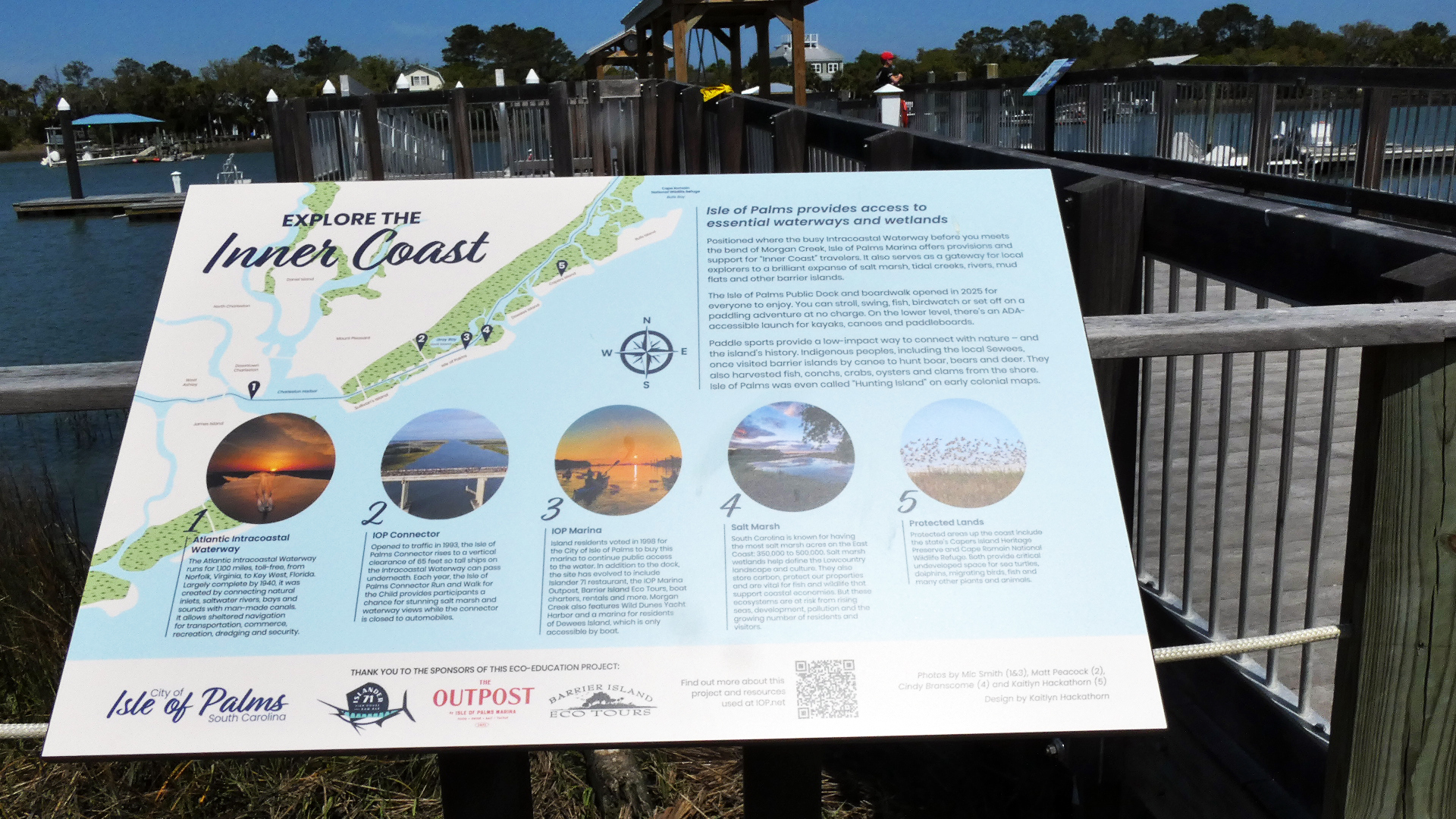
Creating policies for sustainable growth and natural resource protection is particularly urgent for the City of Isle of Palms, nestled on a sea island surrounded by the ocean and marsh. The city council created the Environmental Advisory Committee — a volunteer group including residents and two students — which meets monthly to address such issues as wildlife protection and finding ways to make the city a model of environmental stewardship for other coastal communities.
“I've always been a big proponent of taking care of the environment, taking care of our Earth,” said Laura Lovins, chair of the committee, who joined after working with the Turtle Team and the Audubon shorebird steward program. “This is all we have.”
Working with the Surfrider Foundation, the committee helped install cigarette butt disposal canisters at popular beach locations. Smoking-related litter dropped to about 16% of beach debris in 2023 from about 21% the year before. The city also partnered with local glass recyclers and created a food scrap collection program that yields compost for gardens while reducing landfill waste.

The city has supported grassroots efforts like the Isle of Palms Cleanup Crew’s No Toy Left Behind bin at Front Beach, which collects abandoned plastic toys before they wash out to sea. City leaders are exploring ways to expand the program with additional bins at beach access points.
Families leaving the beach can place their sand toys and buckets at drop points to be used by other visitors or recycled at the end of the season.
The committee has engaged in an information campaign to teach beachgoers about protecting nesting areas for sea turtles — particularly to fill in holes dug during the day — and protecting habitats for other wildlife, including shorebirds.
Beyond the beach, the city took steps to offset greenhouse gas emissions from its buildings by using a federal grant to add solar panels to its public works facility.
The advisory committee has taken on water testing to ensure that its residential septic tanks do not contaminate the ocean or other water. Lovins said several rounds of testing revealed that the biggest water quality offender was animal waste — both wildlife and pets. In response, the committee is installing dog waste stations on Waterway Boulevard.
Nearby, the Town of Mount Pleasant created the Green Space, Environment, Ecology and Natural Resources Commission, or GREEN Commission, in 2023 to deal with perennial coastal environmental issues like water quality, wildlife habitats and wetlands conservation.
What distinguishes Mount Pleasant’s approach is the commission’s expertise. At least five of the commission’s nine members are required to have some expertise in the fields of green space, environment, ecology or natural resources.
“The commission [has] environmental-thinking people that have expertise, vision and ideas that maybe staff doesn't have,” said Christopher Lubert, senior planner for the town. “We have the ports here that employ engineers who are familiar with state regulations as far as wetlands, which has been crucial to us doing a wetlands ordinance … I think we we're definitely blessed with our citizens being those experts in their professional lives.”
Protecting wetlands, which serve as a natural buffer to flooding, help filter pollutants from water and provide wildlife habitat, is one of the town’s most pressing issues, especially as federal protections have shifted in recent years.
In addition to helping develop a local wetlands ordinance, the GREEN Commission has played a major role in helping the town strengthen a countywide ban on plastic bags and create low-impact development guidelines.
“It’s basically a low threshold where engineers just have to do some common sense, low-cost things to improve water runoff and flooding issues, put in more environmentally friendly architecture features and lighting, or you have meters that shut sprinklers off when it rains,” Lubert said. “It's not a big drag on developers, but it has huge benefits to the environment.”
The town is looking at similar guidelines for residential areas that wouldn’t be regulations, but suggestions.
“How do we incentivize homeowners to put in rain gardens, to put in pollinator gardens?” he said.
Also on the residential side, the GREEN Commission has led tree plantings and created a “tree bank.”
“Basically, if you remove a tree and you can't replant one, you pay us the cost of that tree and we'll plant it,” Lubert said. “We've put in a lot of trees — palm trees, understory trees, any kind of tree we could — just with the purpose of shade.”
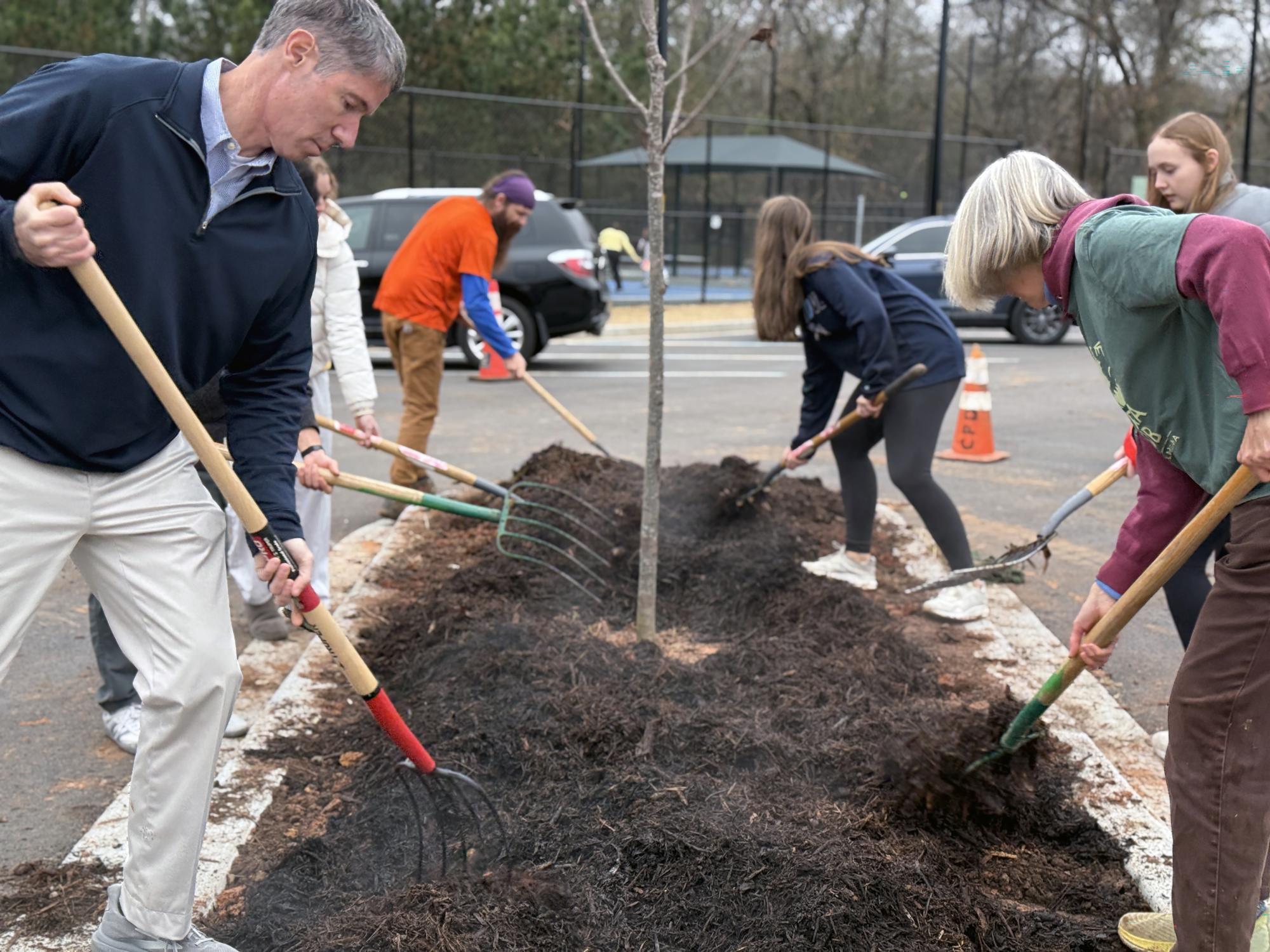
On a commission recommendation, the town council now created a tree task force.
Trees are also a top issue for the Upstate City of Clemson, which is one of the fastest-growing cities in the state.
The city created the Sustainability Advisory Committee in 2024 to help with natural resource preservation, energy efficiency, waste reduction and sustainable development. Its members are residents and specialists appointed by the city council. Tapping into the expertise at nearby Clemson University allows the city to include specialists such as naturalists, horticulturists and landscape architects.
“We have a master naturalist that is on the committee. And that has been a wealth of resource for us,” said Tony Tidwell, Clemson’s director of urban and park land management.
The committee spent much of its first years learning, with city departments and experts from the university making presentations.
“What we wanted to do is get our heads around what the city's actually doing, so we weren't trying to recommend things that were already in place,” Tidwell said. “A lot of it is information gathering for them. And as they say now, they're drinking through the fire hose and just trying to get all the information they can, so they can make educated recommendations that are going to count.”
Nowhere is the committee’s influence more visible than in the city’s Grow a Greener Clemson initiative, focused on the sustainability of the city’s tree canopy, an environmental asset that helps manage stormwater, improves water quality, reduces heat and preserves wildlife habitat.
A grant from the SC Forestry Commission allowed the city to map its canopy — measuring about 48% coverage of land area. The city offers residents incentives for planting trees as well as planting them on public lands.
“We give trees away, we do tree plantings, and there's a lot of public outreach in that,” Tidwell said.
The city’s maximum possible canopy coverage is 51%, he said, and that is the goal it wants to reach.
Wildlife conservation is another key focus. Clemson has been recognized as a Monarch City, pledging to plant milkweed throughout the community to support declining Monarch butterfly populations. The city is working toward certification as a wildlife habitat, an effort that aligns public spaces and private landscapes with the needs of native species.
“With a city that is developing like Clemson is, there is going to be displaced wildlife,” Tidwell said. “So we are just calling on residents to pitch in and provide those places — a sustainable area for food, water and a place for them to raise their young.”