
Whether it’s in a large city with numerous blocks of significant structures or a small town with a deeply rooted history, promoting a distinctive and historic downtown district makes a lot of sense.
Historic preservation helps cultivate a sense of community pride, draws visitors, celebrates history — and often comes with strong economic benefits.
“Historic downtowns, in towns large and small, are gathering places and centers of economic and social activity,” said Supervisor of Registration, Grants and Local Government Assistance Brad Sauls with the State Historic Preservation Office. SHPO is a part of the SC Department of Archives and History. “They are places where people connect with each other, locals and visitors alike. Historically, downtowns were centers for business, shopping, dining and the home of our governmental and cultural institutions. Many aspects of community life overlapped in historic downtowns and that is continued where historic downtowns are maintained or revitalized.”
Sauls said that before cities can start the preservation process, leaders must take an inventory of historic resources, with the understanding that residents may have differing opinions on what in a downtown should be preserved, and how. Part of that process includes seeking public input about what is considered significant and worthy of protection, and the reasons why those resources are considered important.
“Without understanding and broad support from the public about the need and value of preserving historic resources in the community, efforts by leadership to establish a preservation program are less likely to be successful,” he said.
Sauls said many large and small municipalities around the state found success in historic preservation efforts. For example, he said Columbia has succeeded in cultivating a successful downtown that includes historic architecture and spaces where people want to work, live, shop, dine out and make social connections.
“The historic commercial zones along Main Street, Gervais Street and the Five Points district provide the places where people like to go for entertainment and culture, and many historic buildings are utilized to provide those opportunities,” he said. “The city’s adoption of the special property tax assessment for rehabilitation of historic buildings, in combination with available federal and state preservation tax incentives, have helped make it possible for historic buildings to be repurposed for compatible new ventures that contribute to a thriving city center. “
Smaller towns throughout the state also have seen success in community development through preservation, often anchored by public-private partnerships such as art venues in historic buildings. Some of Sauls’ examples: Newberry, Abbeville and Sumter opera houses continue to be performance spaces for local productions and touring shows; Fountain Inn repurposed a historic school for use as a theater; Greenwood’s art museum is located inside the historic former post office; and historic movie theaters in Conway, Hampton, Cheraw and Dillon now host live performances.
“These historic buildings provide the setting for community enrichment and help attract business for neighboring merchants and restaurants,” Sauls said.
That has certainly been the case in Anderson, where historic preservation plays a central role in the long-term vision for downtown and the surrounding neighborhoods of the city, which was founded in 1826.
“Preserving downtown Anderson helps maintain the character, identity and sense of place that define the community,” said Mary Haley Thompson, Anderson’s director of strategic projects. “Historic downtowns offer something that newer developments often cannot replicate — authentic architecture, walkable streets and buildings that tell the story of how a city grew over time.”
Thompson said the renovations help the local economy, with restored commercial spaces having new life as restaurants, boutiques, offices and small businesses.
“Their character and charm help attract visitors, support tourism and encourage continued private investment in the downtown area,” she said. “At the same time, preservation supports smart growth. Reusing historic buildings allows cities to build on existing infrastructure while maintaining the scale and character that make downtown environments vibrant and walkable.”

Several areas of Anderson are designated historic districts, with some listed on the National Register of Historic Places. The city uses a combination of planning tools, preservation incentives and long-term planning strategies to support property owners who want to restore and maintain historic buildings, while ensuring that redevelopment remains compatible with the character of the surrounding districts.
The city’s Board of Architectural Review considers proposed exterior changes to buildings located within designated historic districts and helps ensure that renovations, new construction and building improvements are compatible with the area. The city also uses incentive programs to encourage rehab and reinvestment, particularly the Bailey Bill, a state-authorized property tax incentive that encourages the rehabilitation of historic properties by freezing property taxes at the pre-rehabilitation value for a period of time.
The city’s Business Assistance Program offers grants to help property owners maintain and improve historic downtown buildings, with help for projects including historic preservation, facade improvement and design assistance.
Thomson said the city regularly works with property owners, developers, historians and community organizations in ways that encourage adaptive reuse and integrate historic interpretation into public spaces and projects.

Financial incentives help, too. Programs that can offset some of the cost of restoration — such as tax incentives, facade grants and rehabilitation funding — can make preservation projects more feasible for property owners and small businesses, she said.
“One of the most important lessons we’ve learned is that successful historic preservation efforts require collaboration and long-term commitment,” she said. “Cities benefit greatly when preservation is supported by a strong network that includes local government, preservation boards, property owners, developers, historians and community organizations.”
While preservation is always the preferred outcome when it comes to historic buildings, Thompson said in some cases structures deteriorate to a point where restoration is no longer feasible. That happened with the long-vacant old Anderson Hotel site on South Main Street. While the city worked for years with property owners and developers to consider redevelopment opportunities, the building was too deteriorated to save.
The city eventually purchased the property and demolished it, and the site is now being positioned for redevelopment in line with Anderson’s downtown master plan, “Shock This Block,” which focuses on revitalizing underutilized downtown areas and encouraging new investment while maintaining the district’s historic character, Thompson said.
In the City of Manning, the biggest ongoing historic preservation effort is the facade grant program that has been in place since 2008, said Carrie Trebil, special projects coordinator for Main Street Manning. To date, 15 facade projects have been completed using the competitive grants that reimburse building owners for rehabilitation of the building.

Manning’s design committee oversees the facade grant program, and its insight has played a vital role in keeping the program going. “The facade grant program is one of the first things our Main Street program took on,” she said.
“For other communities looking to implement facade grant programs, think through all the details first and have very clear instructions for a timeline of completing and reimbursing the funds,” she said.
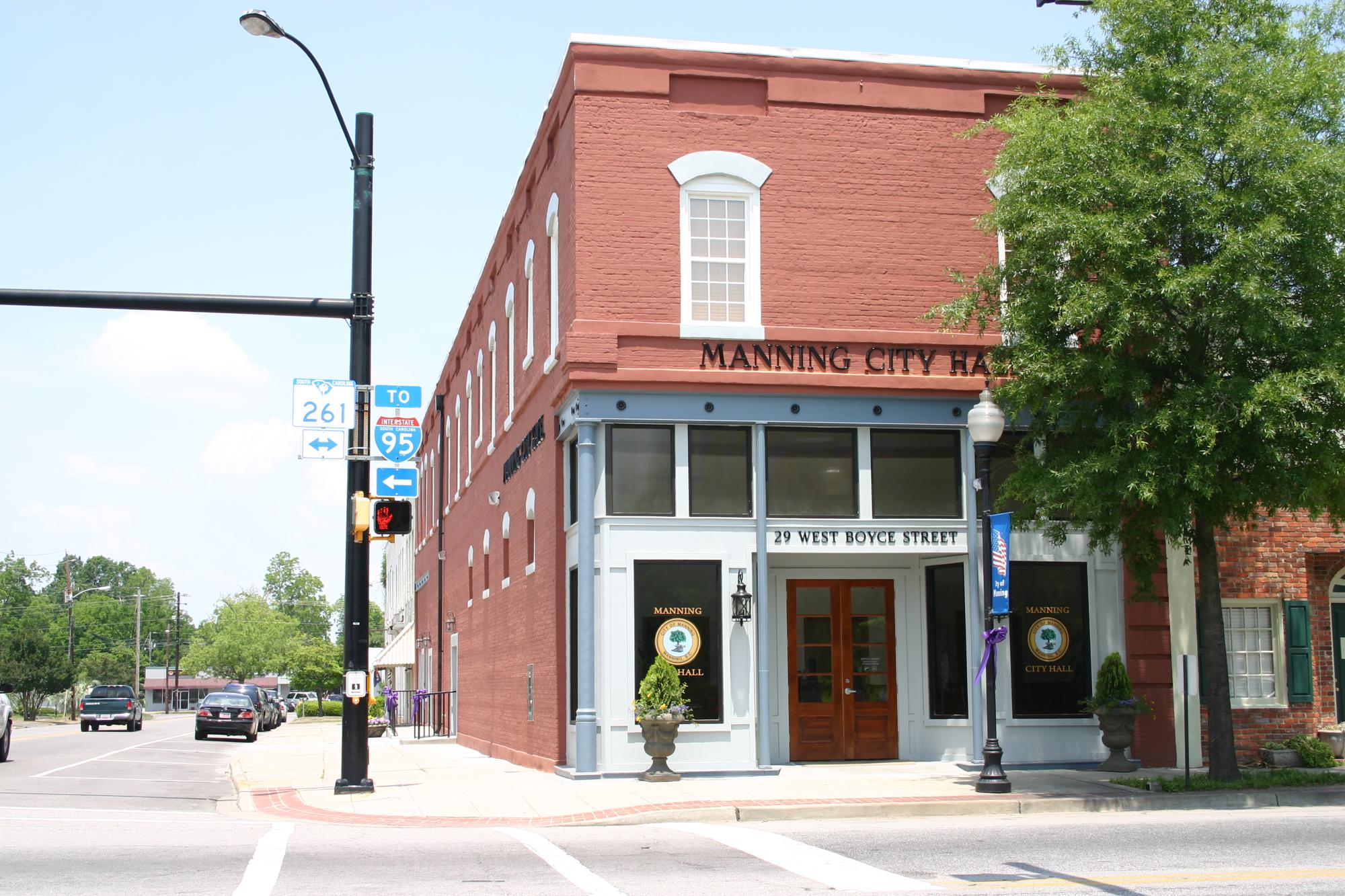
Trebil said Manning City Hall is one of the city’s revitalization success stories. One of the oldest buildings in town, at least part of the building dates to 1891 and was home to everything from a hotel to a fabric shop to a furniture store, along with other businesses. A 2007 wind storm caused substantial roof and window damage to the building, which was painted, repaired and renovated. It opened in 2010 as Manning City Hall.
“Many of our downtown buildings are on the National Register of Historic Places, and we feel it is important to preserve that history because buildings just aren't built like that anymore — the windows, the columns, you don't see that in new construction,” Trebil said.