
Sports tourism is big business — and getting bigger every year —as cities in every corner of South Carolina recognize the economic and quality-of-life impacts of recreation centers. Some recent examples of these kinds of developments can be found in Rock Hill, North Myrtle Beach, Darlington and Woodruff.
Rock Hill
The City of Rock Hill was one of the first cities in the state to see the importance and value in sports tourism, starting in the 1980s. It has kept up the momentum in the decades since.
“I think it's a testament to the leadership that's in Rock Hill, from a council standpoint and a management standpoint,” said Mark Sexton, the city’s director of parks, recreation and tourism. “You look at the leaders in Rock Hill back in the in the ‘80s, when the textile industry was starting to go away. They were trying to really diversify and trying to figure out what was the next big thing. Our leadership at that time said, ‘Okay, the textile mills are shutting down. What are we going to do?’ It was highly controversial. When they built Cherry Park in the ‘80s, it was a four-to-three vote on city council, that's how close it was. And if that facility had not been successful, I don't think anything we're talking about [now] would have happened.”
But Cherry Park — a 68-acre complex built primarily for baseball and softball — was highly successful. Its pinwheel design, with fields spread around a tower placed in the middle, was among the first of its kind in the Southeast. Now, designs of this type are everywhere.
“That started the softball and baseball push for sports tourism and we hosted some very large events — the [National Softball Association] World Series, some Dixie Boys World Series, upwards of 688 teams from all over United States and Canada,” Sexton said.
That led to an additional facility with four more baseball fields across the street. Then, with the help of the hospitality tax, there was a push to open a tennis center. A few years later, the city opened Manchester Meadows, a 68-acre park just off Interstate 77 for large-scale, high-profile soccer tournaments.
“When that facility opened up [in 2006] we really started seeing the big economic impact from youth sports tourism, beyond just softball and baseball,” Sexton said. “We hosted national tournaments, soccer, lacrosse. We’ve done the Quidditch World Championships there. We’ve done rugby.”
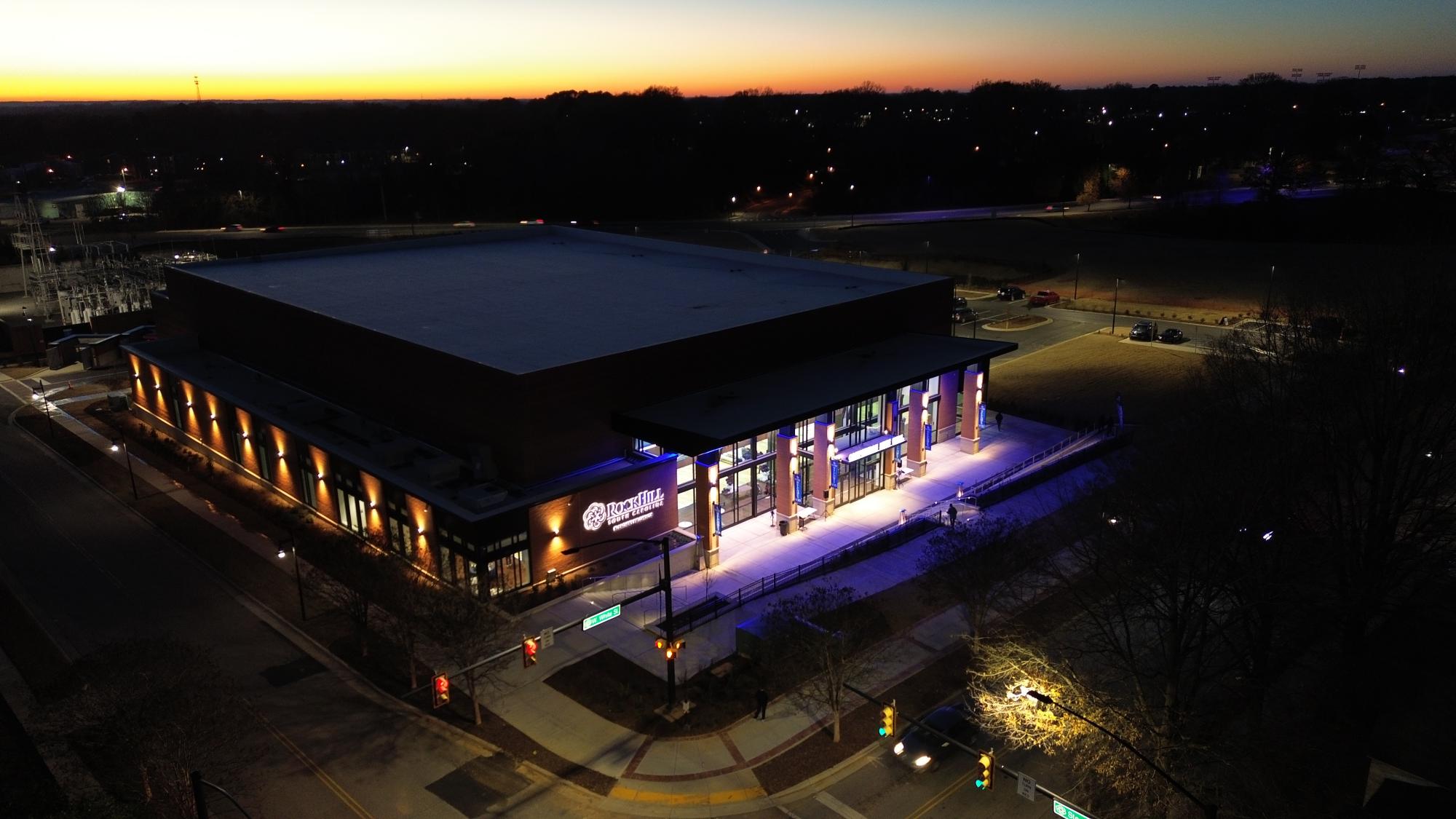
The next frontier was cycling — with the Velodrome opening in 2012 and a BMX super cross track in 2014 — drawing national and international attention. 2019 saw the arrival of the Rock Hill Sports and Events Center, a 170,000-square foot facility near downtown used primarily for basketball and volleyball, which also features event space and hosts events from boxing to gymnastics. In 2025, the Bleachery Fieldhouse provided more basketball, volleyball and pickleball courts, and the city is now in the design stage of a new 80-plus acre regional park.
Sexton said Rock Hill’s success —with a direct economic impact growing from $43 million in 2005 – 2009 to $407 million from 2020 – 2024 — can be linked to several things, including the addition of “tourism” to the parks and recreation department name in 1988. That made the department the destination marketing organization for the City of Rock Hill, providing it the authority to market and sell the city’s facilities to outside organizations. Also, he said, the city has committed to maintaining facilities at a high level.
“You’ve got to have a good quality staff that can work together — your sales team, working with your maintenance team, working with your recreational programs, being all in it together,” he said. “Tourism is a big portion of what we do, and we're all hands on deck in understanding that we're in a competitive market, and that means that the way somebody looks at trash on the roads is important, and the way somebody feels welcomed into our city is important, and if somebody walks into a bathroom and it's not clean is important.”
North Myrtle Beach
In North Myrtle Beach, the city capitalized on its coastal location and climate as it stepped into the sports tourism market.
The North Myrtle Beach Park and Sports Complex opened in 2014 with six baseball and softball fields, eight soccer or multipurpose fields, seven picnic shelters, two dog parks, three playgrounds, an amphitheater and 3 miles of walking trails. A private company leases land to run a wakeboarding park at the complex. In addition to events including concerts, festivals and a Christmas drive-through light show, the park hosts about 50 sports tourism events each year, said Matt Gibbons, parks and recreation director for North Myrtle Beach.


“When we're not doing sports tourism events, it’s a community park, so people walk there every day. And we’ve got about 2,000 kids that play youth sports there. A typical week would be Monday to Thursday night, every field would be taken with our youth sports. And then on the weekend the sports tourism events come in,” Gibbons said. “It wasn't long after we opened the complex that the city decided to expand it, and we bought 91 acres directly adjacent to it.”
The second phase of complex, which opened in 2026, added soccer, baseball and softball fields and another 2 miles of trails. Gibbons said the first phase generates about $30 million a year in direct economic impact, with another $12 – $15 million expected with the addition.
Baseball and softball are the biggest drivers, with tournaments nearly every weekend drawing teams from around the country. In March, about 120 college softball teams came to play during Spring Break. Gibbons said that spring trainings continue to grow during this “shoulder season.”
“A lot are from the Northeast, like Pennsylvania and New Jersey,” he said. It might be 50 degrees, but they’re in the pools and they’re on the beach. Most of them haven’t stepped foot on their fields at home yet because of the weather.”
Construction will soon begin on the city’s $6.2 million pickleball complex. The city is also home to a membership-based facility with a gym, basketball courts, after-school programs and summer camp, that celebrates its 20th year, with plans for an expansion in the near future.
Gibbons described the complex’s success as coming from it being a multi-use facility.
“We're busy seven days a week. There's no downtime, whereas if you don't have a recreational side to it, they might sit empty for four days during the week waiting on the tournaments to get here on the weekend,” he said.
Darlington
In Darlington, the Blue Street Sports Complex, home to softball and baseball fields, opened in the 1970s. Over the years, some facilities deteriorated and were no longer functioning.
“We were in dire need of something new,” said Lee Andrews, the Darlington County parks, recreation and tourism director, who works with the municipalities in the county.
When he was hired in 2013, he was tasked with finding a location for a new sports complex location that could fit five or six fields on it. The City of Darlington eventually decided to renovate what it already had — a good deal, because the sports complex sits on the land the school district owns and leases to the city. The complex, which is on the back side of the high school property, reopened last year and now is home to five recreation fields for baseball and softball, in addition to the high school’s facilities.
“We made everything brand new out there, from bathroom buildings to concessions to fencing and lighting,” Andrews said. “Plus, the school district built a brand new high school baseball field for Darlington High and renovated the softball field at the same time and put in a lighted practice soccer field, plus six tennis courts. And it's all for public use when it's not being used by the school.”

The fields host Little League softball and baseball games during the season, along with tournaments and events like movie nights and concerts.
“The main thing it was built for is for our citizens as their baseball and softball fields. They practice there and they play there. But this year, we've got 22 tournaments scheduled out there. So, we're banking on some tourism dollars brought into the City of Darlington,” he said. “There is a little bit of pride in the complex when you see people come out there. We were fortunate enough to host a couple of our Little League All Star tournaments out there last year, and everybody was really impressed with the facility.”
Woodruff
In Woodruff, the Riverbend Athletic Complex, a 103-acre facility with synthetic turf fields, will open in summer 2027, and already has its own preview website — www.riverbendathleticcomplex.com. It will feature four full-sized baseball fields that can accommodate baseball, soccer, softball, lacrosse and flag football. It will also have lighted pickleball courts, a dog park, walking trails along the Enoree River, a kayak launch and a destination playground with picnic shelters, said Lee Bailey, Woodruff city manager.

“The Riverbend Athletic Complex is about investing in the young people of our community. As our community continues to grow, we have a responsibility to create spaces where our children and families can thrive,” Bailey said. “This complex will give our youth more opportunities to play, grow and create memories.”
The complex is intended to host a wide range of activities, Bailey said.
“The complex is being built to serve our residents and provide the youth with high-quality recreational opportunities close to home. At the same time, the facility is designed to attract tournaments and regional events that will draw visitors into our community,” he said. “Those events bring teams and families who support our downtown businesses. It positions Woodruff as a destination for sports tourism and economic growth.”